
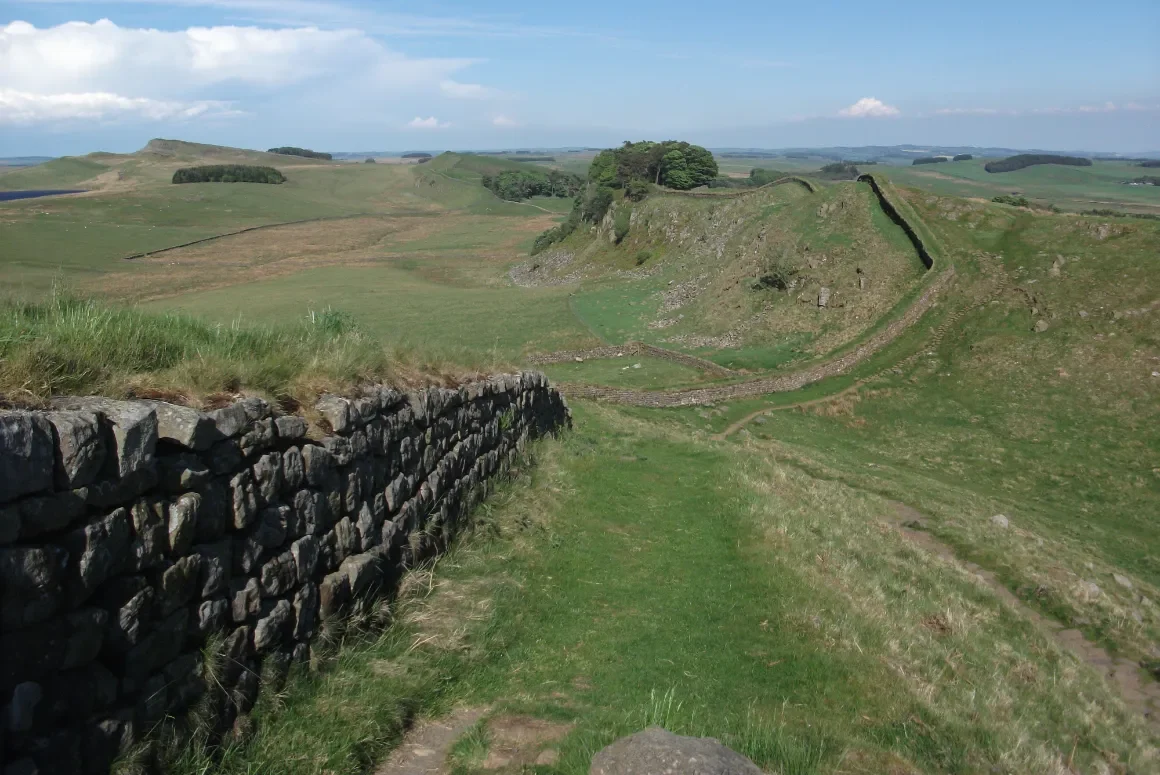
Hadrians Wall
Unique and significant
Hadrian’s Wall is the finest surviving frontier work from the whole Roman Empire, and the only one to be built as a long stone wall. Its uniqueness and cultural significance are recognised by its designation as a UNESCO World Heritage Site.
Begun in the year 122 AD on the orders of the Emperor Hadrian, it ran for 80 Roman miles from coast to coast across Northern England and was manned by troops for nearly 300 years.
Both physically and symbolically the wall defined the limits of the ‘civilised’ world ruled by Rome; behind it lay the Romanised province of Britannia, where Britain’s classical heritage was introduced; beyond it Britain’s Celtic heritage lived-on in Pictland, now called Scotland.
-
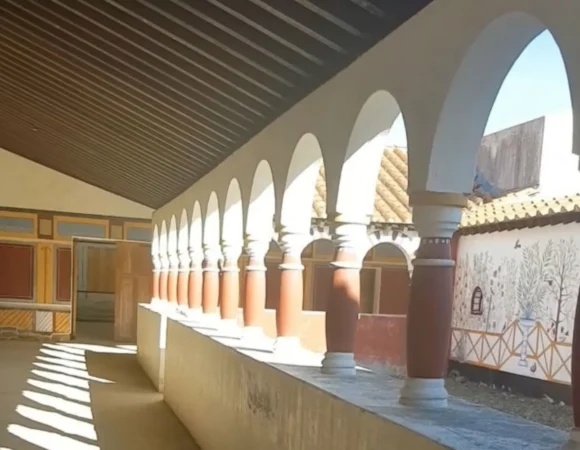
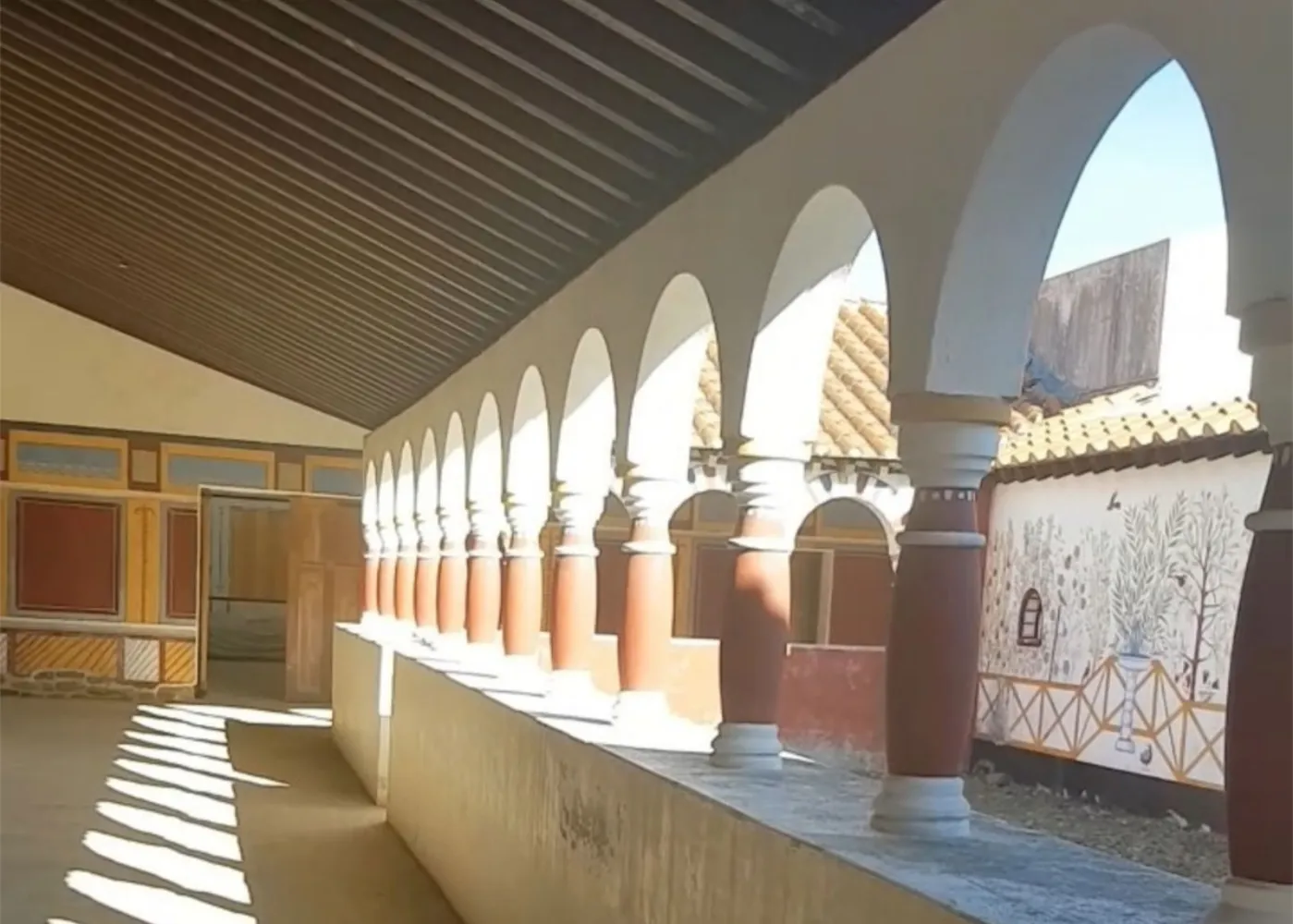
- Commanding Officer’s House at Arbeia Roman Fort [1]
-
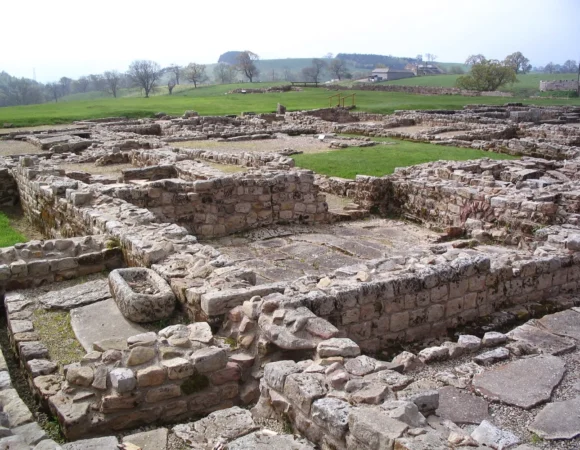
- Roman fort and settlement of Vindolanda [2]
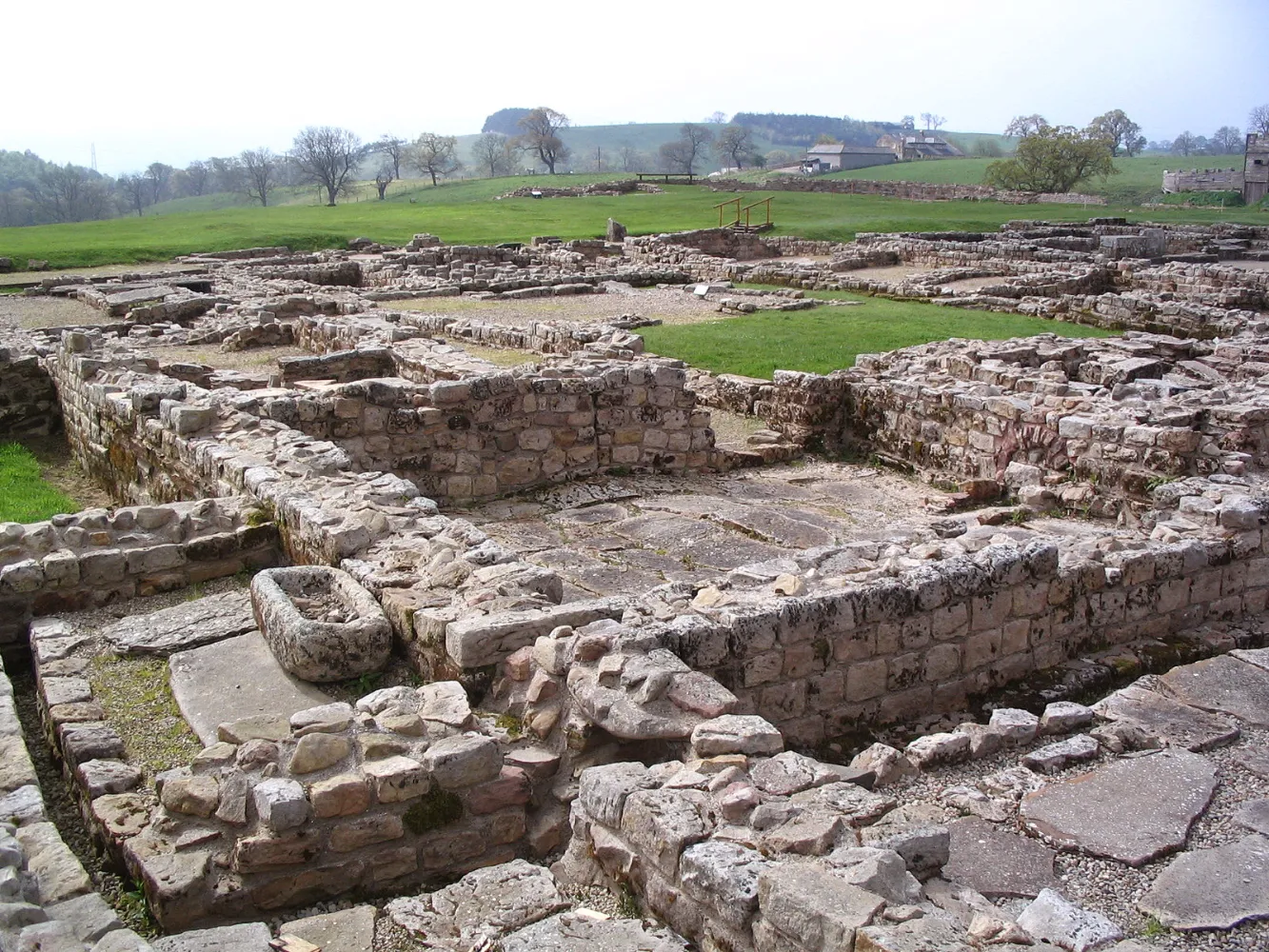
Some of the most interesting aspects of modern research look at the cosmopolitan nature of frontier life, where Romans met Britons, and citizens met barbarians. New discoveries are being made all the time by ongoing archaeological excavations, with sites such as Vindolanda producing fascinating insights into life on the edge of the Roman Empire.
Recent management and investment in ‘Hadrian ‘s Wall Country’ is also ensuring a great visitor experience of both the cultural interest and natural beauty of this classic ancient monument and its landscape. Parts of the wall have been restored, footpaths have been improved and buildings have been reconstructed. At Wallsend fort a viewing tower gives a bird’s eye view of the site, while at the Roman Army Museum there is a stunning 3-D audio-visual. The many turrets, milecastles, forts and towns along the length of the wall provide plenty to see, and there are frequent special events with legionaries and Celts bringing history alive.
Recommended Publications:
“Hadrian’s Wall. English Heritage Guidebook” by David Breeze.
English Heritage, 2006 (paperback), 60 pages, ISBN 978-1850749790
This attractive guidebook is a good starting point for getting to know the Wall’s main sites, and includes some basic background about its general history and function.
“Hadrian’s Wall: History and Guide” by Guy de la Bedoyere.
Amberley Publishing, 2010 (paperback), 160 pages, ISBN 978-1848689404
This more informative guidebook by well known Romanist Guy de la Bedoyere includes all the Wall’s sites, combining site details with useful historical background and practical information.
“Hadrian’s Wall” by David Breeze and Brian Dobson.
Penguin, 2000 (4th rev edition, paperback) 384 pages, ISBN 978-0140271829
Perhaps not the most riveting of reads, but this more detailed treatment of the Wall should satisfy the most curious of visitors.
“Vindolanda: A Roman Frontier Fort on Hadrian’s Wall” by Robin Burley.
Amberley Publishing, 2009 (paperback), 208 pages, ISBN 978-1848682108
Vindolanda is one of the most exciting sites on Hadrian’s Wall, and this book by its principal archaeologist gives a true flavour of the site’s importance, and how the amazing discoveries there are giving us insights into the lives of the people who lived and worked on the Wall.
“Hadrian’s Wall and its People” by Geraint Osborn.
Bristol Phoenix Press, 2006 (paperback), 132 pages, ISBN 978-1904675198
A very readable and interesting book which rounds out our appreciation of the Wall by exploring the social and economic aspects of life on and around the Wall, both for soldiers and civilians.
Image Attributes
[1] © Nicky Garland, CC BY-SA 4.0, Source
[2] Francis, CC BY 2.0, Source
[Feature image] Hadrianus1959, CC BY-SA 4.0, Source


