
Orkney and Shetland
Celtic heritage mixed with a Scandinavian feel
The Northern Isles of Scotland contain some of the best archaeology Britain has to offer, and their remote location adds a sense of adventure to their exploration. Whether you are arriving by sea or by air, the trip is well worth it; exceptionally well-preserved prehistoric sites are set amid beautiful scenery, and a tangible Celtic heritage is mixed with a distinctly Scandanavian feel – closer to Norway than to England, the Northern Isles belonged to the Norwegian crown until 1469.
Prehistory: The first settlers arrived here at least 6000 years ago, island-hopping by boat from mainland Scotland. These Stone Age farmers quarried the unique Orcadian sandstone for domestic as well as ritual building, and this has resulted in a remarkably complete archaeological record of Neolithic life. Archaeologists here are able to study whole Neolithic landscapes with stone-built settlements, tombs and ritual monuments.
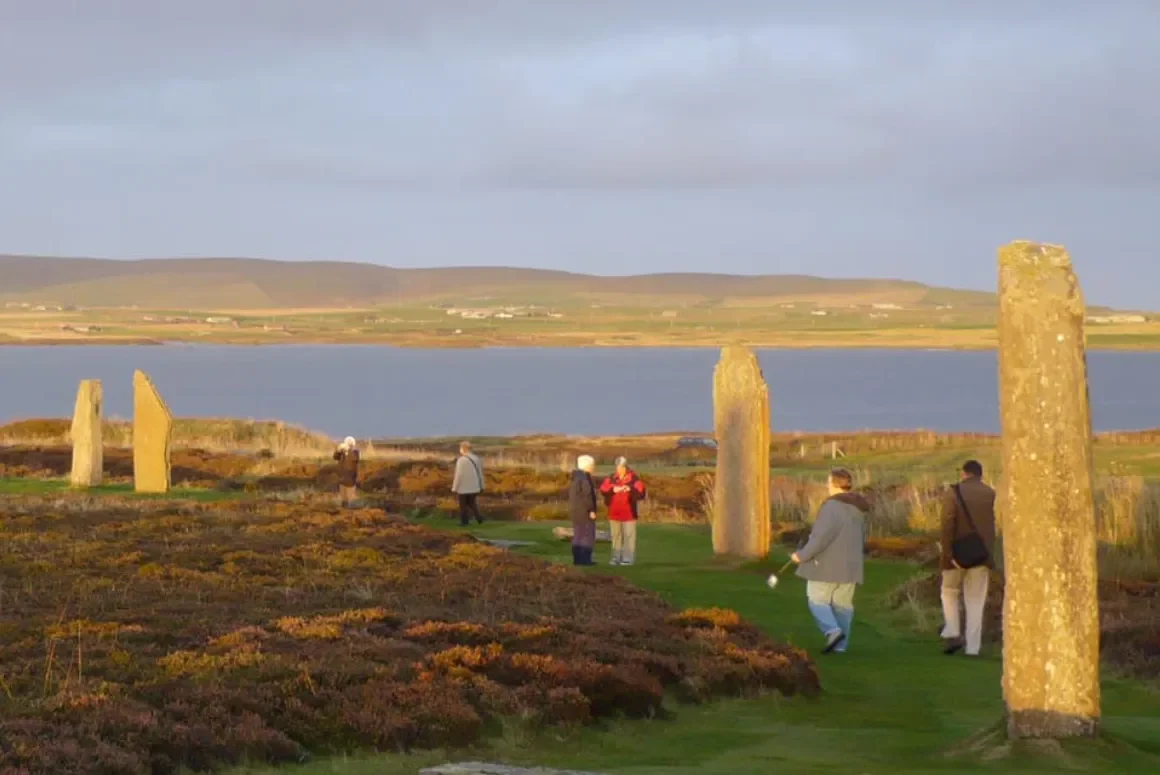
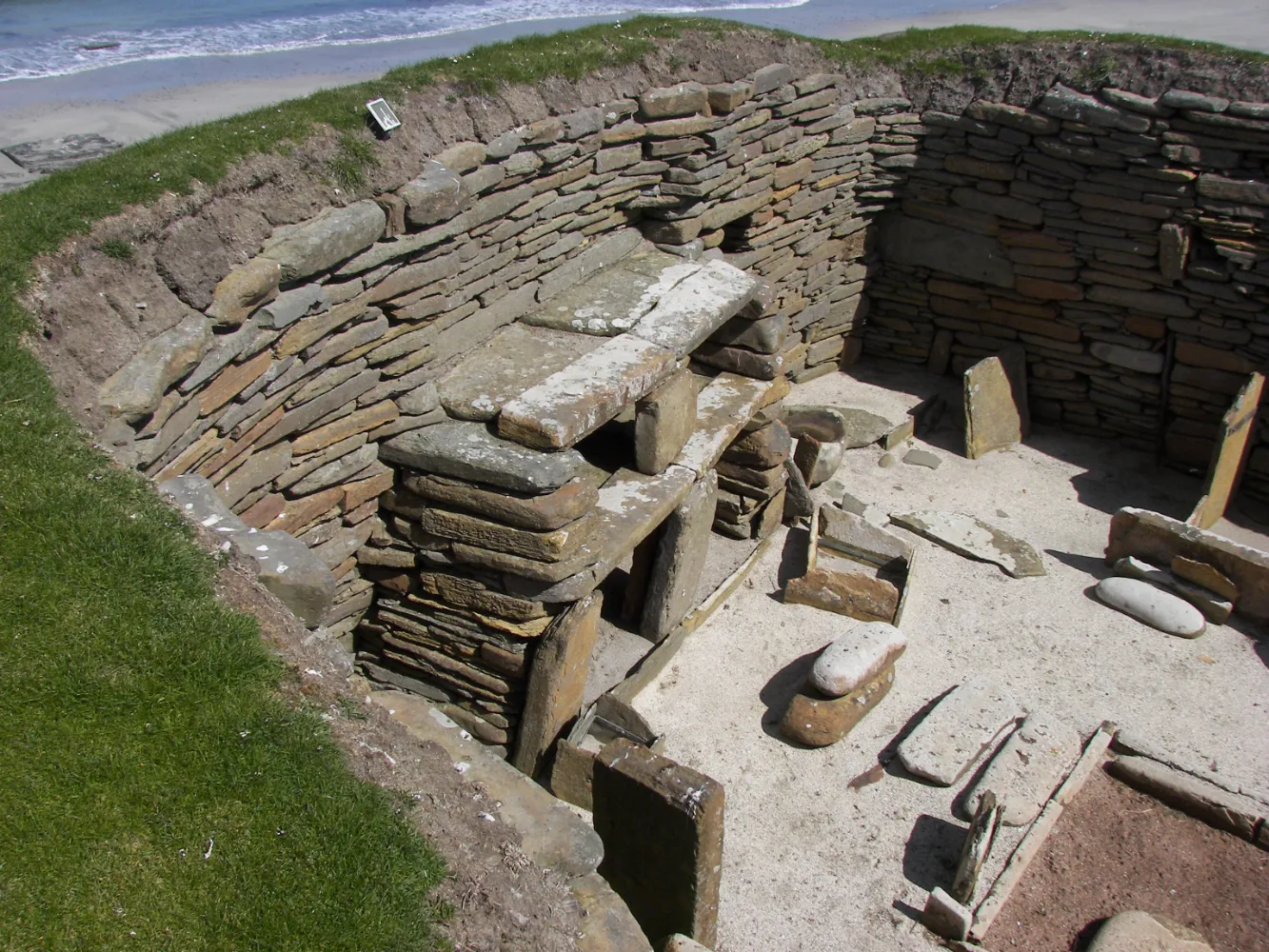
The World Heritage Neolithic village at Skara Brae even has stone furniture still in its original position, within houses built around 3000 BC. Of similar date is Maes Howe, one of Europe’s finest chambered burial tombs, whose interior can still magically illuminate during a midwinter sunset. This megalithic architecture of Orkney culminates in great stone circles at the Ring of Brodgar and Stones of Stenness, two ceremonial monuments which invite us into the Neolithic mind, perhaps evoking in us similar thoughts about life and the cosmos as for those who designed, built and used them.
-
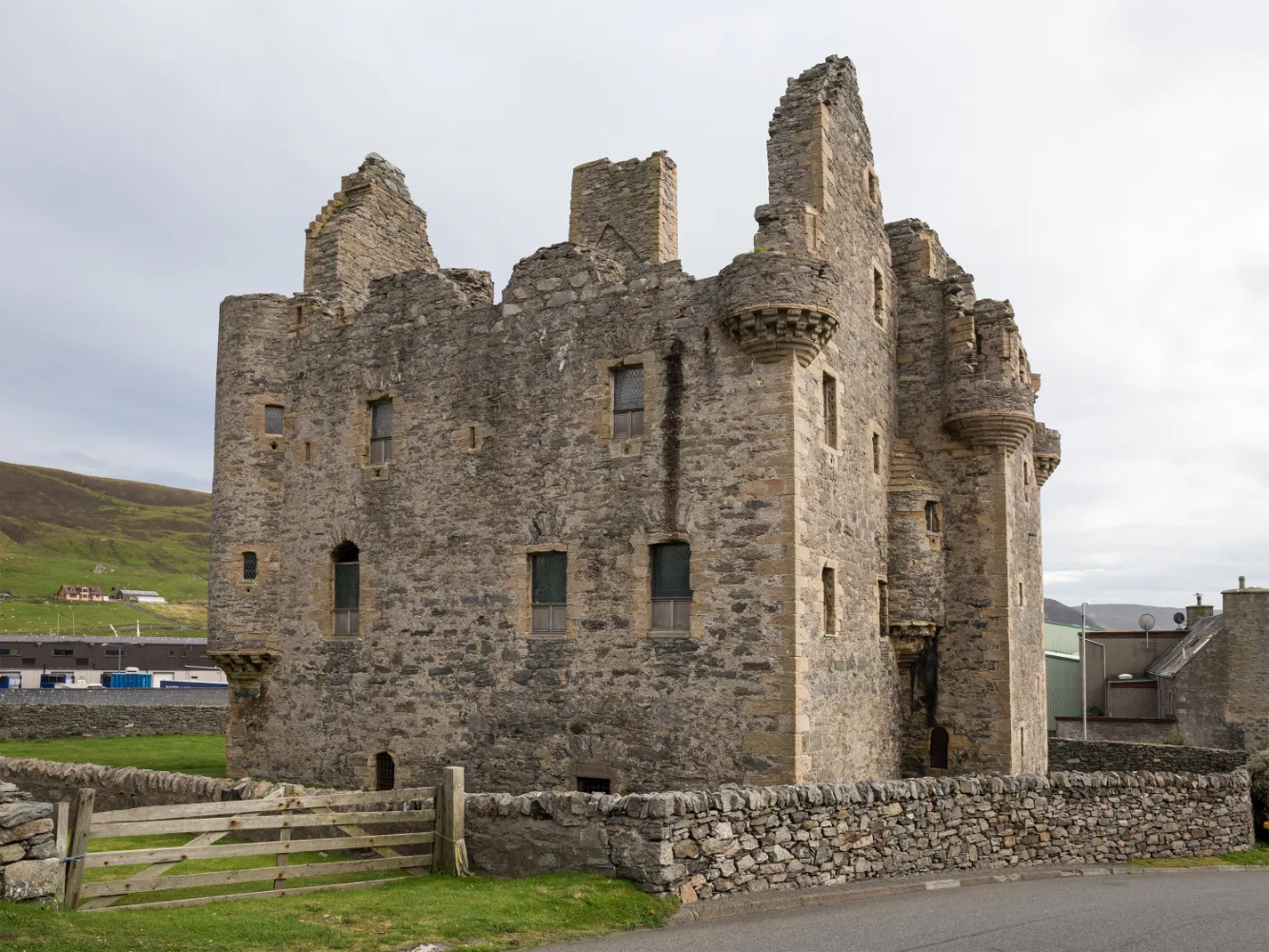
- Scalloway Castle, Shetland [1]
-
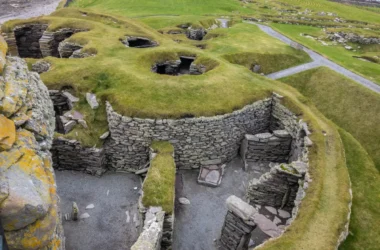
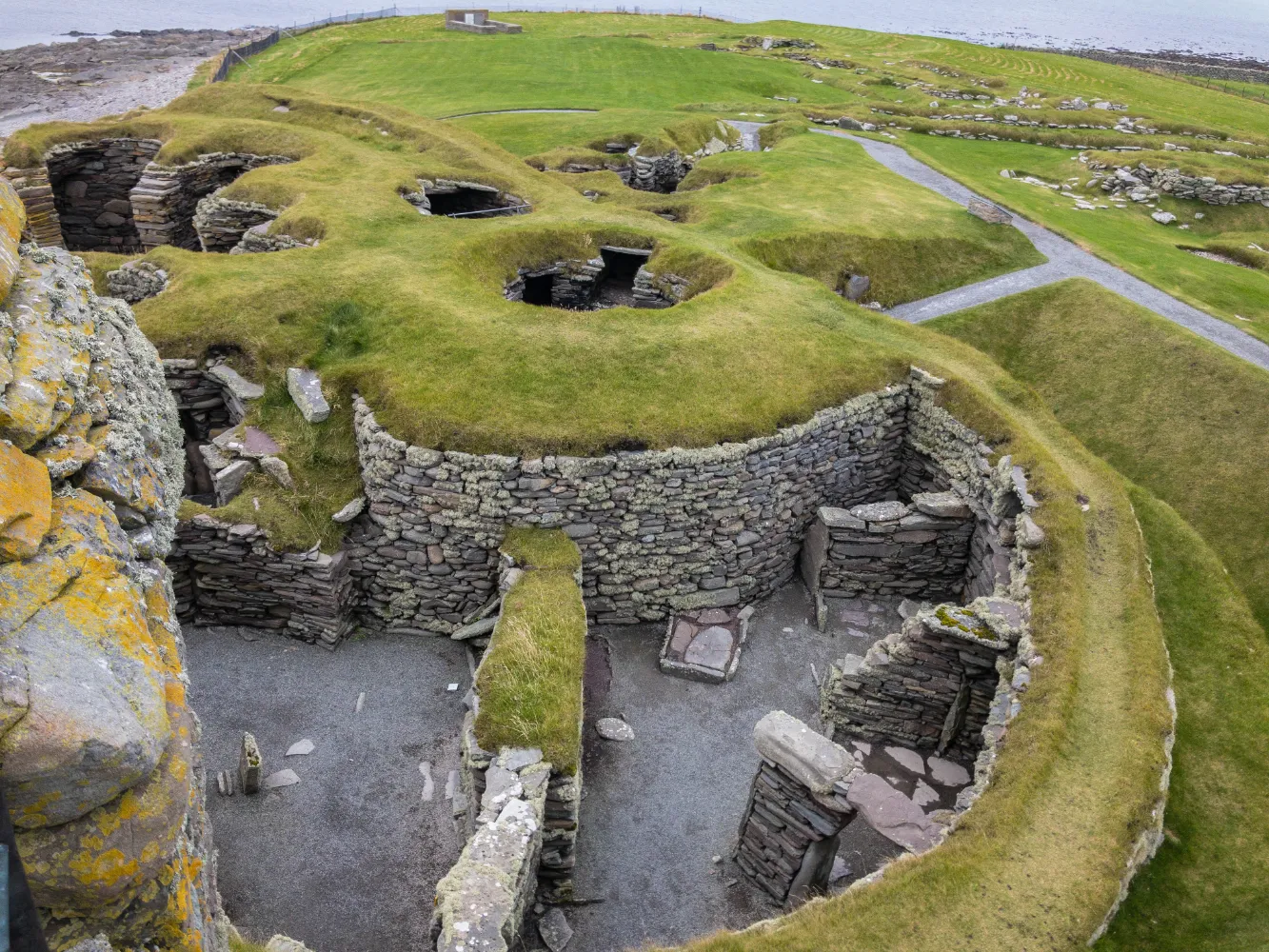
- The settlement of Jarlshof on Shetland has superb examples of Iron Age and Dark Age houses [2]
-
- A 5000 year-old house at Skara Brae, complete with stone furniture. There are some 12 excavated houses in this Neolithic village [3]
Celtic Fastness: During later prehistory, in the more threatening and warlike times of Celtic Europe, the distinctive blockhouses and brochs of the Northern Isles became the local response to a changed world. A visit to Jarlshof on Shetland, and to the ongoing excavations at nearby Old Scatness, bring these centuries vividly to life, and there are many other fine examples on the islands. This is when a strong Celtic heritage took root – the Romans may have sailed around northern Britain to check that it was an island, but they had little influence on this remote Celtic fastness.
Norse Legacy: Christianity eventually found its way to the Northern Isles around 600 AD, via the Picts and Scots, but a hoard of church silver found buried on St Ninian’s Isle in Shetland reminds us that a new foreign threat was soon on the horizon – the Vikings. Initially agressive raids during the 8th century were followed by colonisation, intermarraige and conversion to Christianity. A Norse earldom was created which controlled the Northern Isles for the next 600 years.
Norse longhouses are visible at sites such as Jarlshof on Shetland, and you should allocate time too for the interesting Orkney Museum in Kirkwall and its adjacent St Magnus Cathedral, founded in 1137 by Norse Earl Rognvald. In the 15th century the earldom of the Northern Isles passed from Norway to Scotland, and castles and crofts became an integral part of traditional island life, as illustrated at Scalloway Castle and the Shetland Croft Museum.
Recommended Publications:
1) The Orkney Islands
“The Orkney Guidebook” by Charles Tait.
Charles Tait Photographic, 2012 (4th edition paperback), 624 pages, ISBN: 978-0951785980
This handy, well-produced guidebook covers natural history, economy and practical information as much as archaeology, providing a well-informed all-round view of the Orkney Islands and how to explore them.
“The Ancient Monuments of Orkney” by Anna Ritchie and Graham Ritchie.
Historic Scotland, 2000 (paperback), 76 pages, ISBN: 978-1900168922
This light and nicely illustrated overview from Historic Scotland is an easy to use introduction to all the main monuments from prehistoric times to the twentieth century.
Orkney: A Historical Guide” by Caroline Wickham-Jones.
Birlinn Ltd, 2011 (paperback), 240 pages, ISBN: 978-1780270012
This is a true archaeological guidebook, combining site details and plans with an up-to-date chronological overview from earliest times to the present day.
“Lines on the Landscape, Circles from the Sky: Monuments of Neolithic Orkney” by Trevor Garnham.
The History Press, 2004 (paperback), 176 pages, ISBN: 978-0752431147
This is an original and illuminating study of the Neolithic period in the Orkney Isles which draws on the latest archaeological and anthropological research to find meaning in the complex relationships between settlement, burial and ceremonial sites.
2) The Shetland Islands.
“The Ancient Monuments of Shetland” by Noel Fojut and Denys Pringle.
Historic Scotland, 1993 (paperback), 64 pages, ISBN: 978-0114942007
This light and nicely illustrated overview from Historic Scotland is an easy to use introduction to all the main monuments from prehistoric times to the twentieth century.
“Prehistoric and Viking Shetland” by Noel Fojut.
Shetland Times Ltd, 2006 (paperback), 154 pages, ISBN: 978-1904746072
First published in 1981 and regularly revised since, this useful little guide to the archaeology of Shetland covers all the main points of interest and helpfully provides a gazetteer of sites and suggested itineraries for touring them. An indispensable aid for anyone visiting the islands.
“Ancient Shetland” by Val Turner.
Batsford Ltd, 1988 (paperback), 128 pages, ISBN: 978-0713480009
This lively, easy-to-follow overview provides a good introduction to the main themes and characteristics of each period from Mesolithic to Viking times, and helps to fill out an understanding of Shetland archaeology.
Image Attributes
[1] Unukorno, CC BY 4.0, Source
[2] Stephan Ridgway – www.flickr.com, CC BY 2.0, Source
[3] Wknight94, CC BY-SA 3.0, Source


