
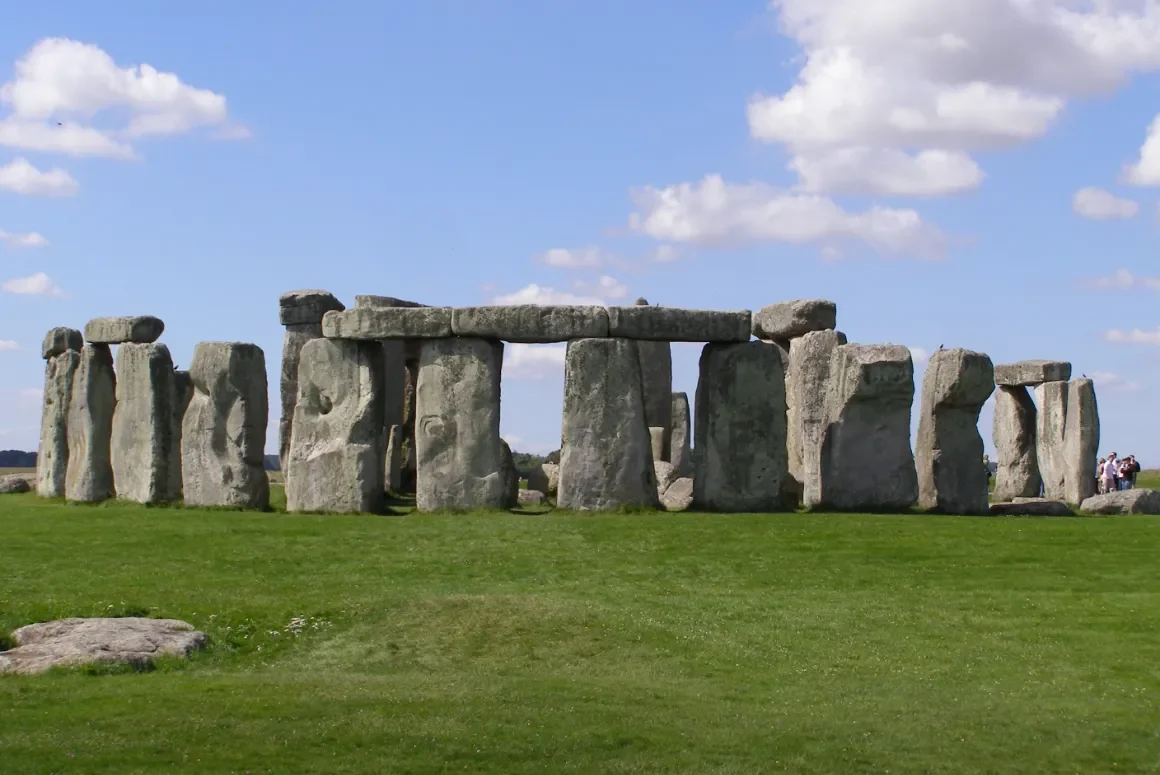
Stonehenge and Wessex
The cradle of England
The region of Wessex covers most of south-western England and contains much of Britain’s richest archaeology. In fact Wessex is regarded, more than any other region, as the cradle of England.
Prehistory: There is a deep heritage to this ancestral land, stemming from a strong Stone Age legacy. At its heart lies a fertile plain where an impressive spectrum of Neolithic and Bronze Age sites bear testament to the skills and ideals of societies who first made this region a centre of prehistoric power and prestige. The famous centrepiece is, of course, Stonehenge, where recent investigations have begun to reveal how this World Heritage monument was originally integrated into a wider landscape of even older sites and monuments.
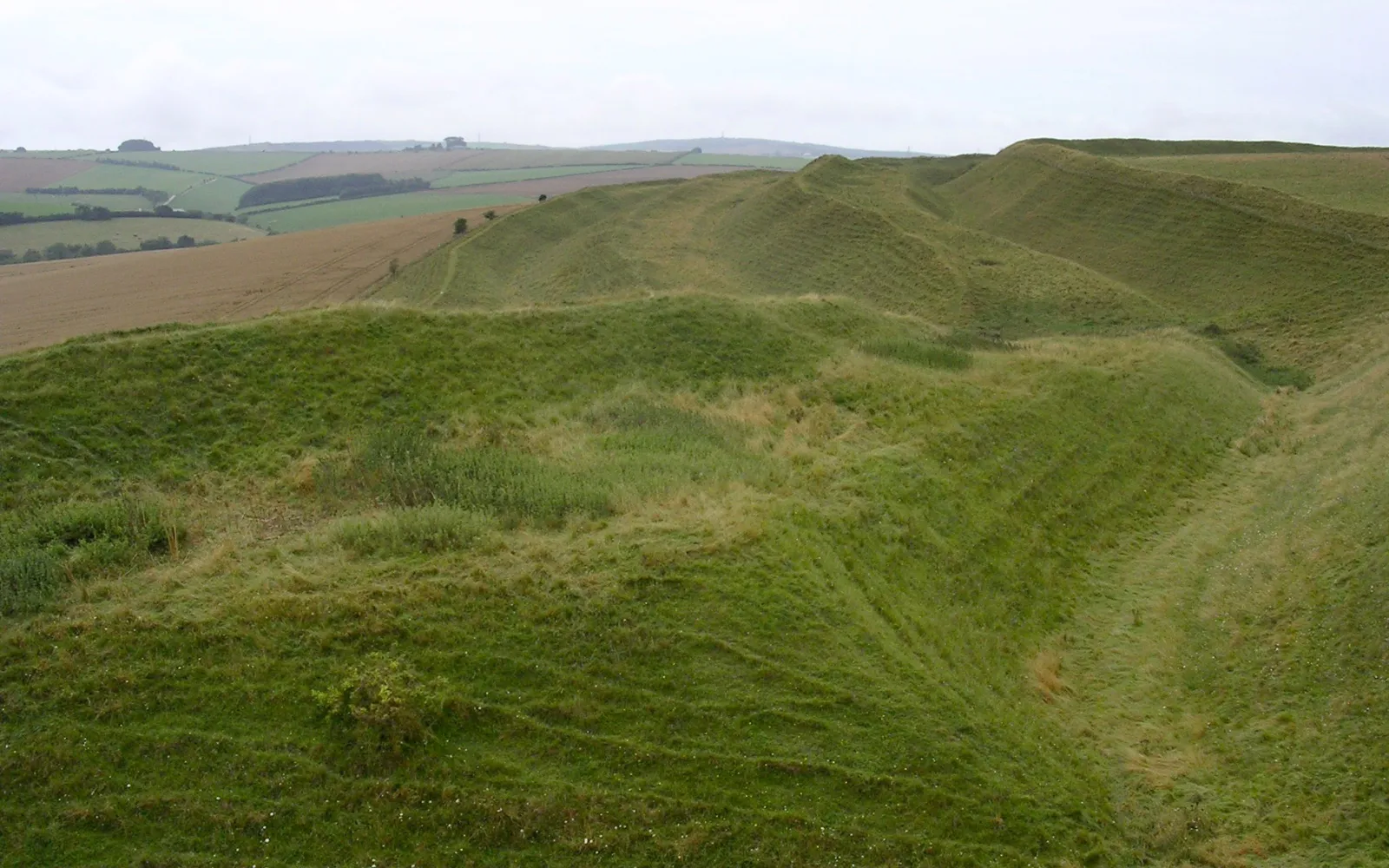
Another landscape cluster of impressive ancient sites occurs around Avebury, Silbury HIll and West Kennet. Indeed, the museums at Salisbury, Devices and Dorchester display the treasures excavated from numerous mounds and monuments throughout Wessex. By later prehistory the continued success of the region led to the development of impressive Celtic hillforts, such as Maiden Castle in Dorset, Danebury in Hampshire and Old Sarum in Wiltshire. Their massive earthwork ramparts reflect the warlike nature of tribal society before the arrival of new social and economic conditions with the Roman Empire.
-

- Bush Barrow Burial [1]

-
- Maiden Castle, near Dorchester, is England's largest Celtic hillfort. These were tribal centres before the growth of towns [2]
-

- Alfred the Great, King of Wessex, 871-899 AD [3]

Roman Wessex: Winchester grew into one of the largest towns in Roman Britain, a busy international marketplace connected to important harbours on the south coast. Much of the region’s farmland was converted into agricultural estates with large villas. Excavations at Fishbourne Palace near Chichester, for example, have unearthed one of the largest and richest villas of Roman Britain.
Arthurian Legend: After the collapse of Rome, Wessex continued to feature as the scene of resistance to Saxon invasions. The legend of King Arthur belongs to this period and may be represented in sites such as Cadbury Castle, perhaps his fabled Camelot.
The Saxon Kingdom: As the Saxons established themselves across southern Britain, their western territory became known as West Saxon land, or ‘Wessex’. By the 9th and 10th centuries AD, under Saxon King Alfred the Great and his descendants, Wessex was the most influential kingdom of Anglo-Saxon England. Its capital at Winchester became the first capital of a unified English nation, finally confirming Wessex as the cradle of English culture with a leading role in the country’s political and cultural development.
Recommended Reading:
“Stonehenge: Exploring the Greatest Stone Age Mystery” by Mike Parker-Pearson.
Simon & Schuster, 2012 (hardcover), 416 pages, ISBN 978-0857207302
This is the most up-to-date, professional discussion of Stonehenge and its surrounding monuments. It is written by Professor Mike Parker-Pearson, whose recent excavations in and around Stonehenge have radically altered our understanding of the monument’s construction, function and meaning, so much so that previous publications on Stonehenge are now largely outdated.
“Stonehenge. English Heritage Guidebook” by Julian Richards.
English Heritage, 2005 (paperback), 48 pages, ISBN 978-1850749332
Although already requiring revision in the light of recent research, this is still a good starting point for getting to know the monument.
“Hengeworld” by Michael Pitts.
Arrow, 2001 (paperback), 432 pages, ISBN: 978-0099278757
This is a highly readable book which amateurs and professionals alike should find valuable and evocative. The author cleverly combines the hard facts with more intriguing questions about the people and society that built and used the henge monuments and stone circles of Britain.
“Old Sarum. English Heritage Guidebook” by John McNeill.
English Heritage, 2006 (paperback), 40 pages, ISBN 978-1850749813
The most up-to-date guide to this splendid site of old Salisbury which boasts an Iron Age hillfort and Norman castle in one.
“Anglo-Saxon England” by Sir Frank M. Stenton.
Oxford Paperbacks, 2001, 765 pages, ISBN: 978-0192801395
This is the third edition of a classic and superbly comprehensive examination of the formation of early England written by the late Professor Frank Merry Stenton, who was knighted for his services as an English historian. The book covers not only the emergence of Anglo-Saxon kingdoms and the importance of Wessex, but also the history of English Christianity and the 11th century establishment of Norman feudalism.
“Social Relations in Later Prehistory: Wessex in the First Millennium BC” by Niall Sharples.
OUP Oxford, 2010, 392 pages, ISBN: 978-0199577712
In this fully illustrated study, Niall Sharples examines in clear and concise language the social relationships of the Wessex region in later prehistory, covering themes such as the significance of hillforts and the development of coinage. An exciting new picture of a period and a region which has considerable importance for British archaeology, and a recommended purchase for anyone interested in the European Iron Age.
Image Attributes
[2] Jim Champion, CC BY-SA 3.0, Source
[3] Hassocks5489, CC0, Source
[Feature image] garethwiscombe – flickr.com, CC BY 2.0, Source


