
Syria & Lebanon
A rich and spectacular heritage
Syria and Lebanon have a rich and spectacular heritage, with some of the oldest and most important archaeological sites in the world. As part of the Fertile Crescent the region saw the very origins of agriculture and the rise of the world’s first civilisations. Situated at the intersection of three continents this land has seen people, trade and ideas converge over thousands of years, creating a vibrant cultural mix and a highly significant archaeology.
Early Cities: By about 3000 BC early cities such as Mari, Ebla and Ugarit flourished as trade links between Mesopotamia, the Mediterranean and Egypt. The National Museum in Damascus displays the art and artefacts from these cities, and travellers can also visit the Bronze Age city of Ebla, near Aleppo.
Early Empires: By about 2000 BC charismatic kings extended their control over the city-states of the Near East, creating the first empires in history; the Akkadians, the Assyrians and the Babylonians all established supreme dynasties here. But the ethnic diversity of the region ensured an underlying mosaic of smaller states and biblical kingdoms; Amorites, Canaanites, Philistines, Israelites, Phoenicians and Aramaeans all became part of a rich and potent political and ethnic make-up.
Phoenicia: By 1000 BC Phoenician seafarers of coastal cities such as Byblos, Sidon and Tyre were very active in transmitting eastern culture westwards across the Mediterranean. The recently renovated National Museum in Bierut is the best place to experience the dynamism and glories of Phoenician culture and craftsmanship.
-
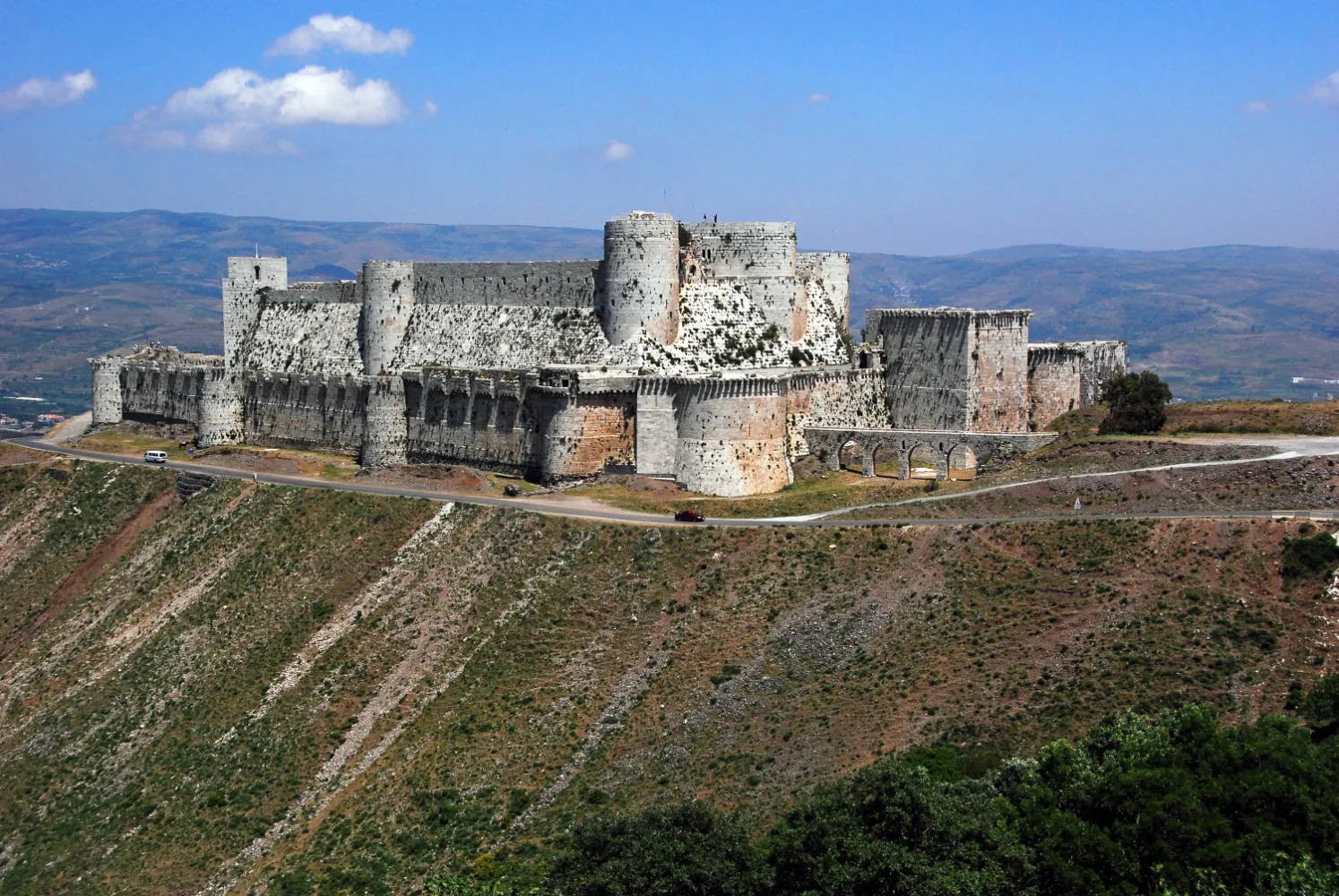
- The magnificent crusader castle at Krak des Chevalier [1]
-
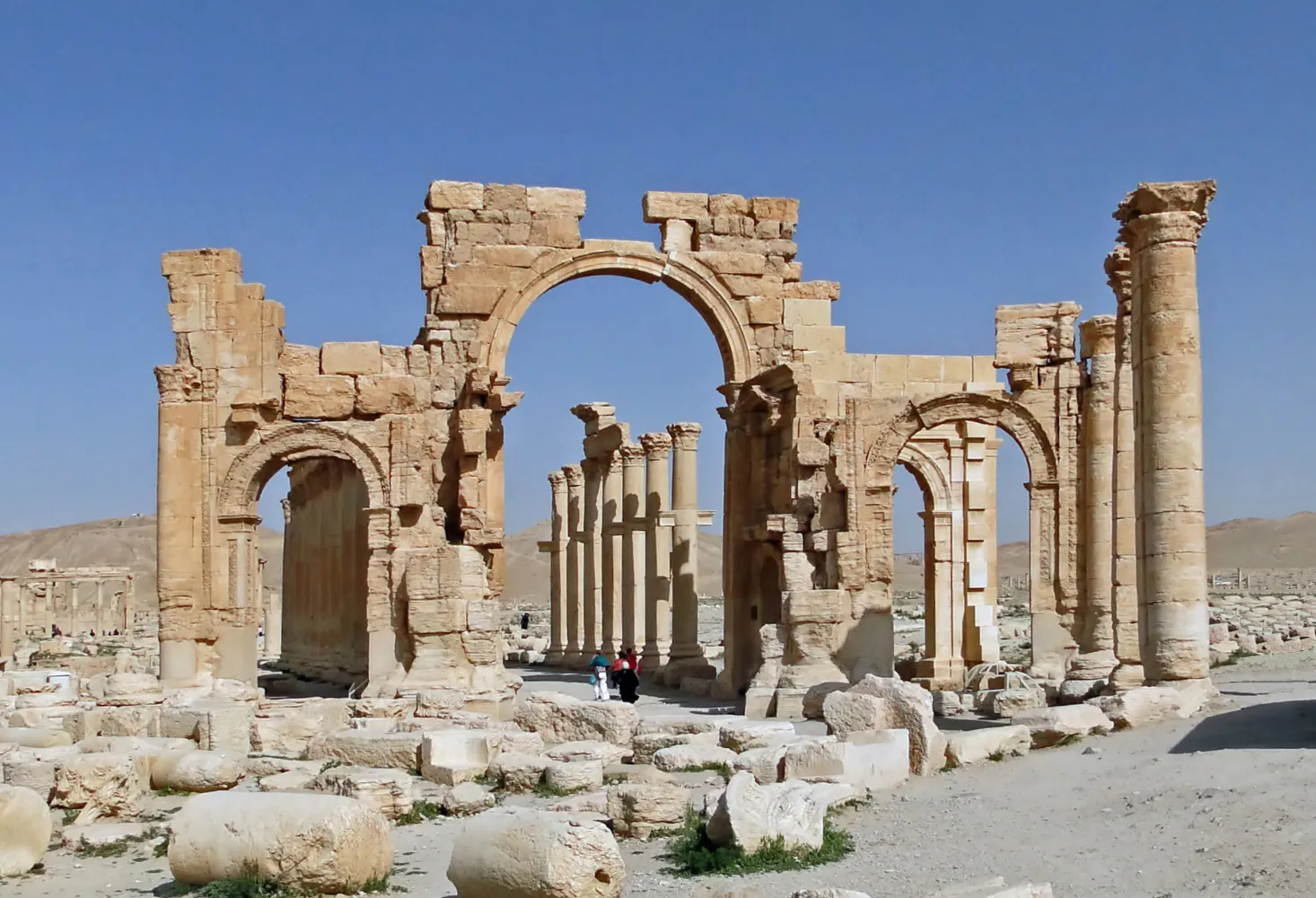
- The beautiful desert ruins of Roman Palmyra [2]
-
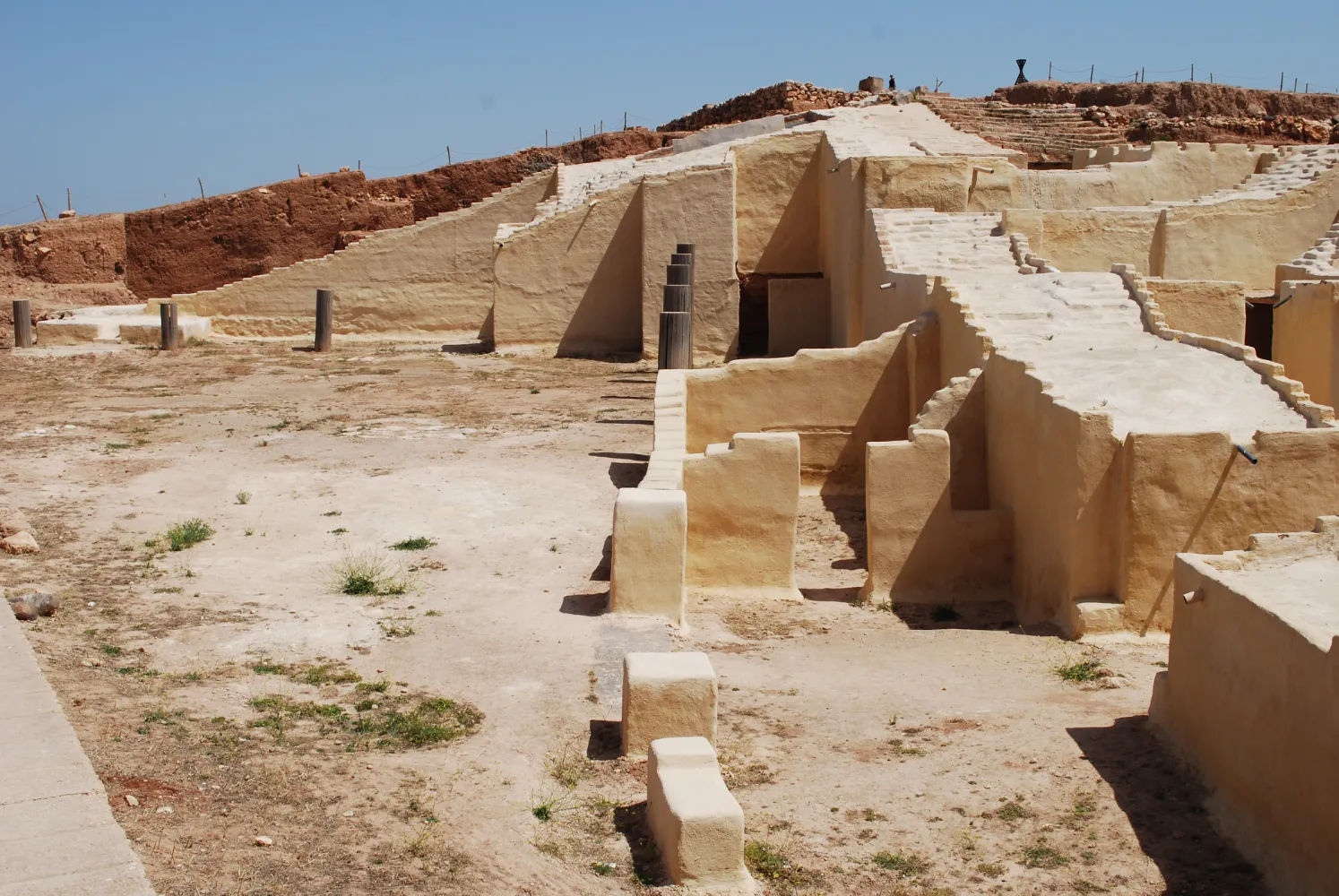
- The archive rooms of the Bronze Age palace at Ebla [3]
Assyria: Between the 9th and 6th centuries BC, the Assyrians held sway across the whole region, and their name was subsequently attached to it. Their capital at Nineveh is now in Iraq, but a visit to the Archaeological Museum in Aleppo reveals fine examples of Assyrian sculpture from northern Syria.
The location of Syria between continents invited early international interest from rival foreign powers, including Persians, Greeks, Romans and Arabs. Some brought eastern influences, others brought western influences, but all have left their mark on Syria and Lebanon.
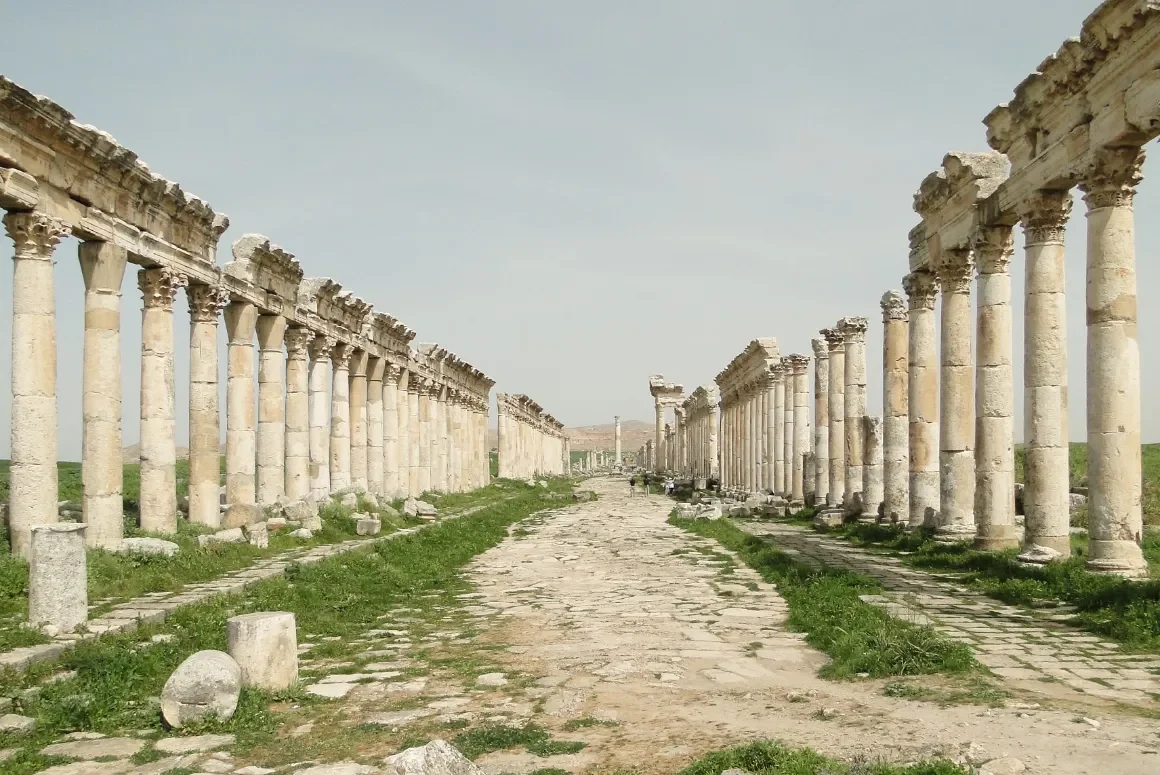
Roman Cities: The most impressive remains are the Roman cities of Palmyra, Apamea, Bosra and Baalbek. Palmyra’s desert location is particularly striking, with its tall ruins standing proud and peaceful in the sands, in stark contrast to Damascus with its deep archaeology hidden below its still bustling city streets.
Crusader Castles: And no visit to Syria would be complete without seeing the magnificent Crusader castle of Krak des Chevaliers, a powerful reminder of how Syria’s location between east and west has attracted the succession of foreign interests and conflicts which continue to affect the region today.
Recommended Publications:
“Phoenicians” by Glenn E. Markoe.
British Museum Press, 2000 (paperback), 224 pages, ISBN 978-0714127671
Glenn Markoe is Curator of Classical and Near Eastern Art at the Cincinnati Art Museum. A reliable and readable introduction to the Phoenicians which covers most aspects of their culture.
“Phoenician Secrets: Exploring the Ancient Mediterranean” by Sanford Holst.
Santorini Books, 2011 (paperback), 380 pages, ISBN 978-0983327905
Sanford Holst is one of the world’s leading authorities on the Phoenicians, and appears in the BBC series Ancient Worlds. His latest book is thoroughly researched and clearly written, and draws back the veil of secrecy surrounding the mysterious Phoenicians.
“Cultural Atlas of Mesopotamia and the Ancient Near East” by Michael Roaf and Nicholas Postgate.
Facts on File Inc (1991) Reprinted by Andromeda, 2008 (hardback), 280 pages, ISBN 978-0816022186
This beautifully illustrated, clear and highly accessible volume is also expertly written by a former director of the British School of Archaeology in Iraq, with advisory editing from a fellow of Trinity College, Cambridge. It is one of the best places to start a familiarisation with the ancient civilisations of the Near East.
“A History of the Ancient Near East ca. 3000-323 BC” by Marc Van De Mieroop.
Blackwell, 2004 (paperback), 349 pages, ISBN 978-1405149112
An excellent introduction for general readers to the multicultural civilisations of the ancient Near East from the emergence of writing and the first cities, through the Babylonian and Hittite kingdoms, to the Assyrian and Persian empires.
“The Archaeology of Syria. From Complex Hunter-Gatherers to Early Urban Societies (ca. 16,000-300 BC)” by Peter Akkermans and Glenn Schwartz.
Cambridge University Press, 2003 (paperback), 458 pages, ISBN 978-0521796668
This is the first comprehensive treatment of early Syria to incorporate recent fieldwork results. Both authors are professors of Near Eastern studies, and here examine the important contributions of Syrian archaeology to issues like the origins of agriculture, the emergence of civilisation, and the world’s first empires.
“The Monuments of Syria. A Guide” by Ross Burns.
I.B.Tauris, 2009 (paperback, 3rd edition), 368 pages, ISBN 978-1845119478
Diplomat and Historian Ross Burns has produced the most detailed and up-to-date guidebook to Syria currently available. A comprehensive gazetteer of sites and museums is complemented by plenty of historical and architectural information. An invaluable aid to anyone exploring the country’s archaeological and historical sites.
“Damascus. A History” by Ross Burns.
Routledge, 2007 (paperback), 408 pages, ISBN 978-0415413176
The previous author has also produced this definitive guide to Damascus, examining every layer of the archaeology and history of one of the oldest continuously inhabited capitals in the world.
Click to Buy at Amazon.co.uk
“Syria. A Historical and Architectural Guide” by Warwick Ball.
Melisende UK, 2006 (paperback), 298 pages, ISBN 978-1901764468
An intelligent layman’s guide to Syria with an historical background and a regional approach. It includes some interesting details and has a readable style.
Image Attributes
[1] James Gordon, CC BY 2.0, Source
[2] Bernard Gagnon, CC BY-SA 3.0, Source
[3] Gianfranco Gazzetti / GAR, CC BY-SA 4.0, Source
[Feature image] Bernard Gagnon, CC BY-SA 3.0, Source


