
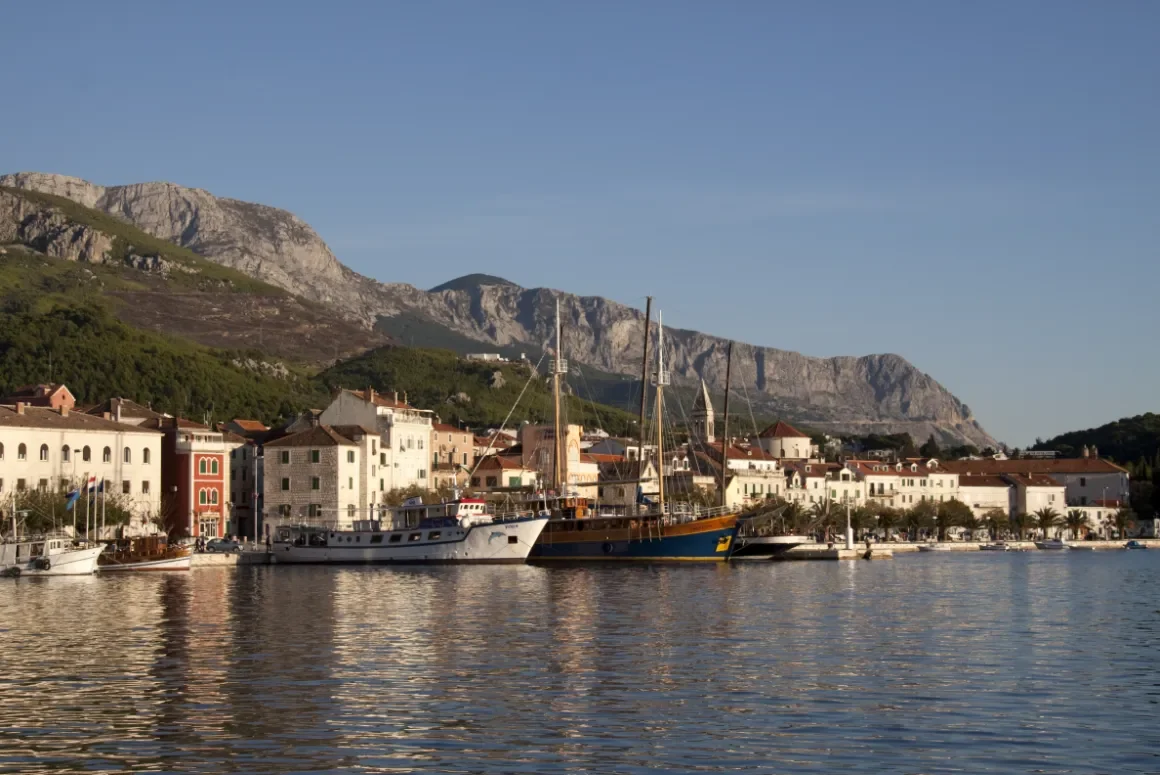
Croatia
A wealth of historic treasures
Now is an exciting time for the archaeology of southeast Europe, as the region opens up after the Cold War decades to reveal its wealth of historic and prehistoric treasures and their significance to the development of European civilisation.
Prehistory: Some of the oldest archaeological sites in Europe are to be found here, dating back to the first arrival of human groups from Anatolia and the Near East. Palaeolithic cave sites in Istria and northern Croatia provide internationally important evidence on human evolution, while the fertile river valleys of eastern and northern Croatia witnessed some of the earliest Neolithic farming settlements in Europe.
Old Europe: From about 4500 BC the copper and gold resources of the Balkan Mountains allowed these early societies to flourish into some of the most sophisticated and creative of the Copper Age world. Sometimes called ‘Old Europe’, these cultures paved the way for the transmission into Europe from the Near East of major changes in human society, heralding the emergence of Bronze Age civilisations. Discoveries at Vucedol, near Vukovar on the Danube River, illustrate the significance of the region in this respect.
Classical Civilisation: From about 1000 BC Illyrian and Celtic tribes mingled here and entered recorded history through their contact with Greek and Roman civilisation. Greek trade throughout the Adriatic led to colonisation along the Croatian coast at sites such as Hvar, Vis, Trogir and Solin. Greek works of art can be seen in the museums of Zadar and Split, but a richer legacy was left by the Romans, who by the 30’s BC had made the region their province of Illyricum.
-
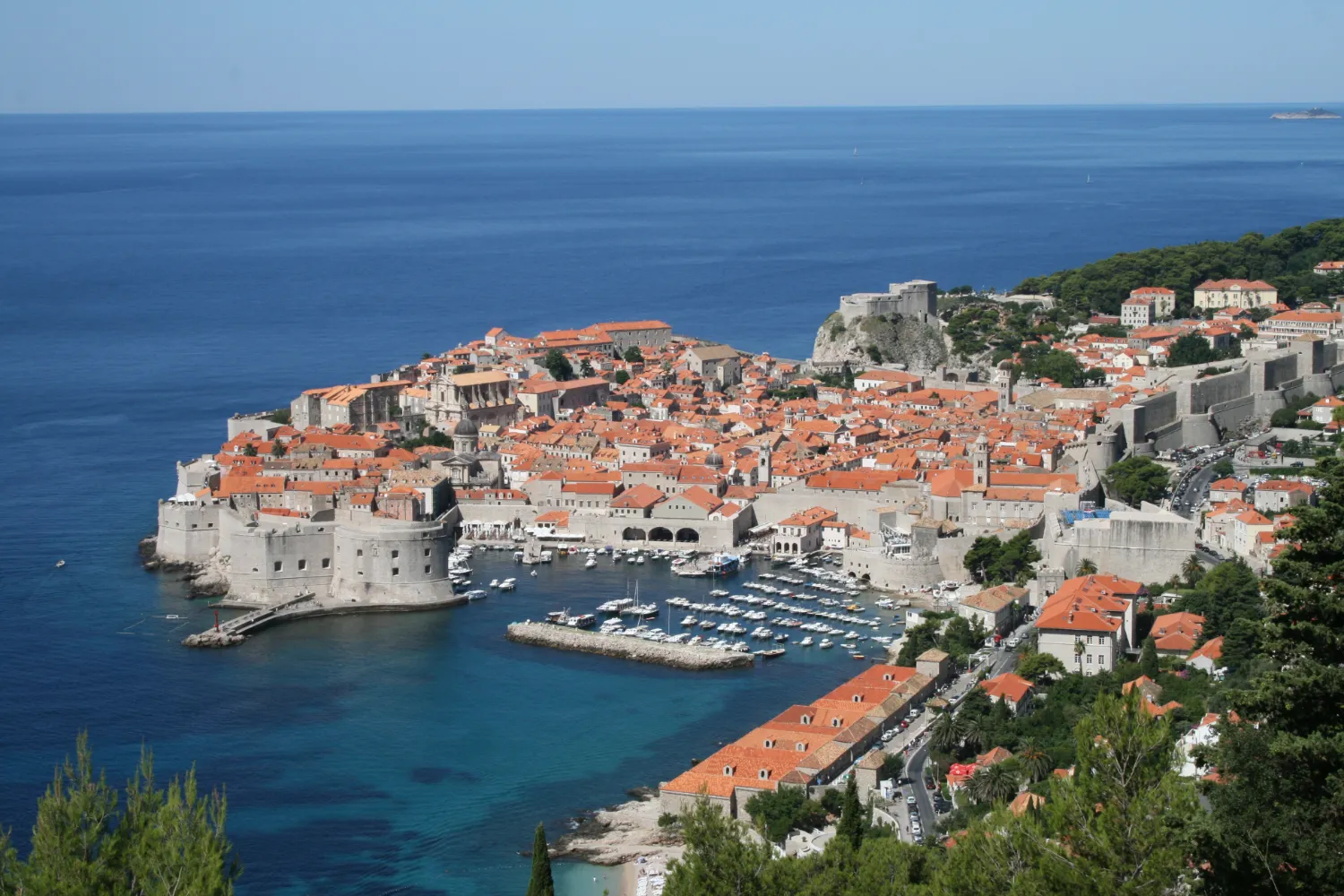
- Dubrovnik. One of a string of beautiful historic towns along the Adriatic coast [1]
-
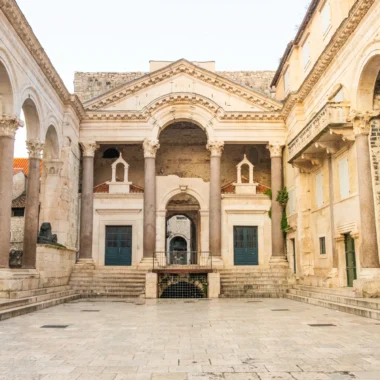
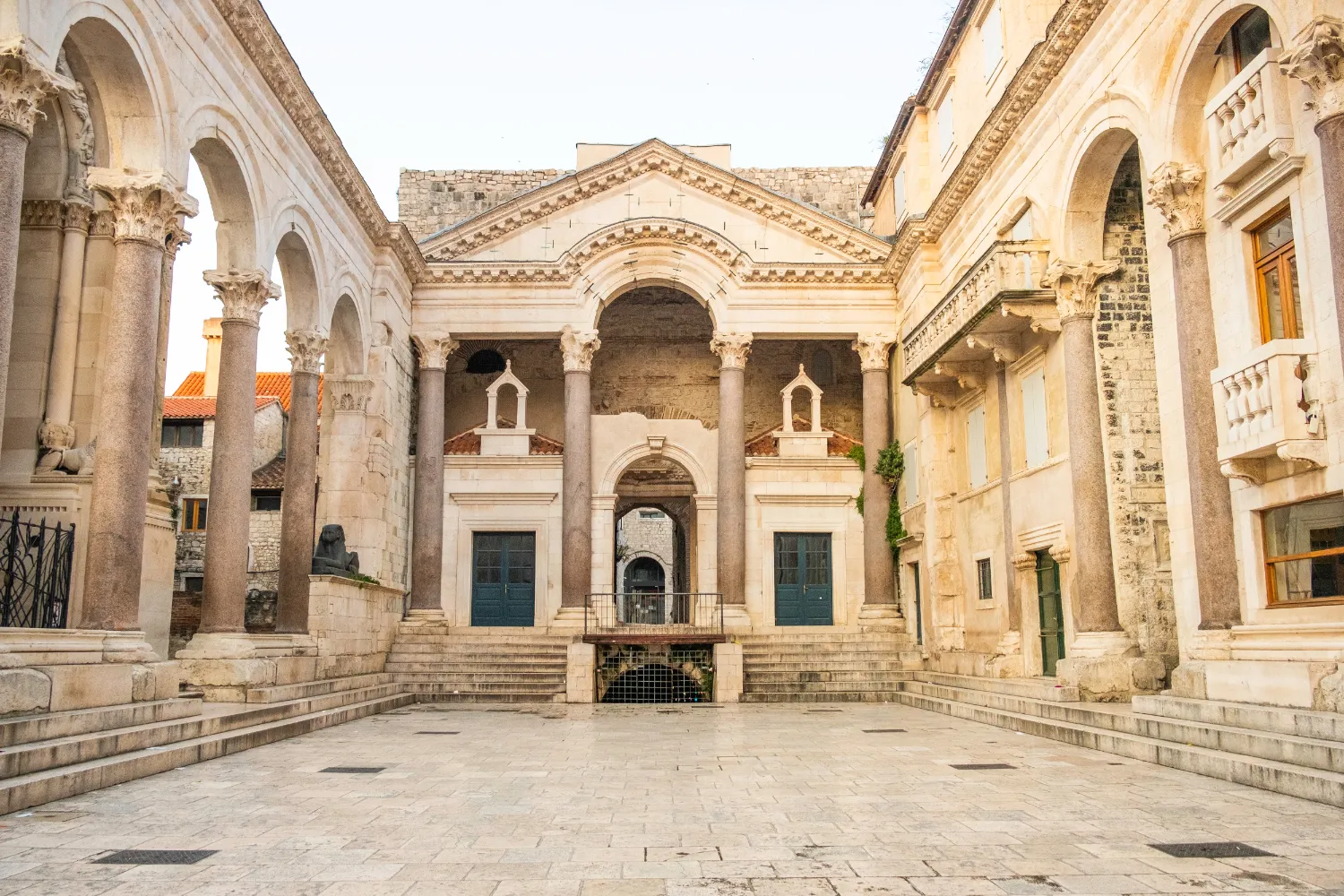
- Diocletian's Palace, Split [2]
-
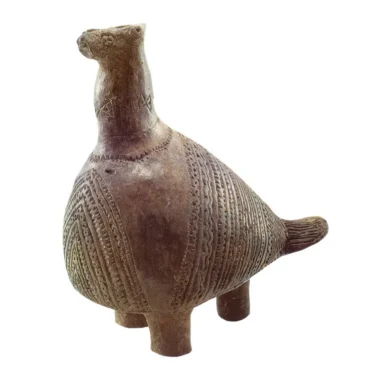
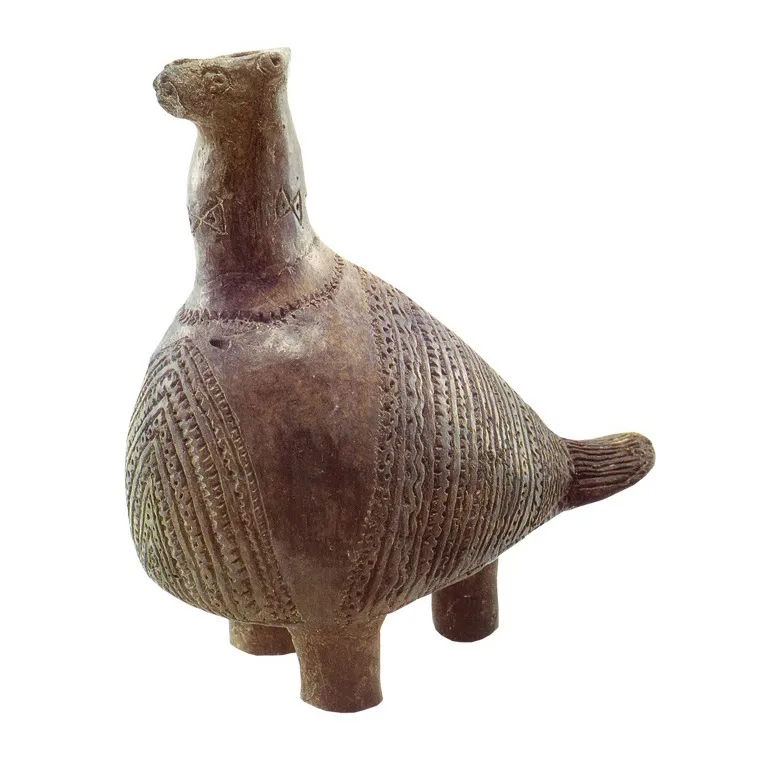
- The Vucedol Dove. 2800-2500 BC. One of the most famous ceramic pieces from prehistoric Croatia [3]
The artistic and architectural heritage of the Roman towns of the Adriatic coast are now justifiably world famous, and can be appreciated at Pula, Solin, Split, Zadar and Narona. The most famous site is Diocletian’s Palace at Split, which the Emperor had built for his retirement in 305 AD. It is the most complete Roman palace in the world, and has evolved over the centuries since into a vibrant, living monument of architectural history, with wonderful examples of Late Roman, Romanesque, Gothic and Renaissance designs.
The Croats: The Museum of Croatian Archaeological Monuments in Split displays finds related to the arrival of the Croats after the break-up of the Roman Empire, and the formation of the Croatian state during the following centuries. Castles, such as that of Klis near Solin, are impressive reminders of life in Medieval Croatia, but the greatest legacies are in the beautiful Medieval towns.
Three Worlds: The towns along the Adriatic coast benefited from Venetian influence and reached their zenith in the Renaissance, whilst those inland and in Istria had Central European influences and display a strong Baroque legacy. A third cultural influence came from the Ottomans, who occupied Eastern Croatia in the 15th century, thereby confirming Croatia’s position at the intersection of three worlds; Europe, the Mediterranean, and the East. This is nowhere better illustrated than in Dubrovnik, ‘Pearl of the Adriatic’, whose golden age in the 15th and 16thcenturies was based on its diplomatic balancing act as a thriving independent republic poised between Catholic West and Muslim East.
Recommended Publications
“Croatia: Aspects of Art, Architecture and Cultural History” With an introduction by John Julius Norwich.
Francis Lincoln, 2009 (hardcover), 224 pages, ISBN: 978-0711229211
This beautifully illustrated volume is the first scholarly study in English on Croatia’s cultural heritage. Leading specialists, such as John Julius Norwich, Timothy Clifford, Marcus Binney, Brian Sewell and Sheila McNally, create an intelligent portrait of key cultural developments in Croatia’s history from ancient to recent times.
“A Traveller’s History of Croatia” by Benjamin Curtis.
Chastleton Travel (Arris Publishing), 2010 (paperback), 274 pages, ISBN: 978-1566568081
The ‘Traveller’s History’ books are always good value, and this one does not disappoint. The author provides a comprehensive survey of Croatia’s history from earliest times to the present day satisfyingly condensed into a portable, readable paperback. As the Daily Telegraph put it, this is ideal before-you-go reading.
“Diocletian’s Palace, Split: Residence of a Retired Roman Emperor” by J.J.Wilkes.
Ian Sanders, 1993 (paperback), 131 pages, ISBN: 978-0952107309
An authoritative account of the surviving remains of Diocletian’s Palace and their importance to architectural history.
“Diocletian and the Roman Recovery” by Stephen Williams.
Routledge, 1997 (paperback), 264 pages, ISBN: 978-0415918275
A fascinating biography of one of Rome’s greatest and most original rulers.
“Southeastern Europe in the Early Middle Ages, 500-1250″ by Florin Curta.
Cambridge University Press, 2006 (paperback), 526 pages, ISBN: 978-0521894524
This is an innovative and authoritative survey of the transition from late Antiquity to the early Middle Ages, exploring important themes such as the rise of medieval states, conversion to Christianity, the monastic movement, architecture and the arts.
“The Illyrians (The Peoples of Europe)” by John Wilkes.
Wiley-Blackwell, 1995 (paperback), 384 pages, ISBN: 978-0631198079
An illuminating survey of the Iron Age tribes who inhabited the region before the arrival of Romans and Slavs.
“The Lost World of Old Europe: The Danube Valley, 5000-3500 BC” by David Anthony and Jennifer Chi (eds).
Princeton University Press, 2009 (hardcover), 240 pages, ISBN: 978-0691143880
Produced to accompany a special travelling exhibition, this beautiful volume presents not only splendid images of the ceramics, figurines and metalwork of the Copper Age Balkans, but also expert essays which provide a much-needed synthesis of one of the most notable and creative episodes in world prehistory.
Image Attributes
[2] Adobe Stock (Free), Source
[3] LZMK, CC BY-SA 4.0, Source
[Feature image] Tony Hisgett, CC BY 2.0, Source


