
Sicily
A rich and uniquely Sicilian heritage
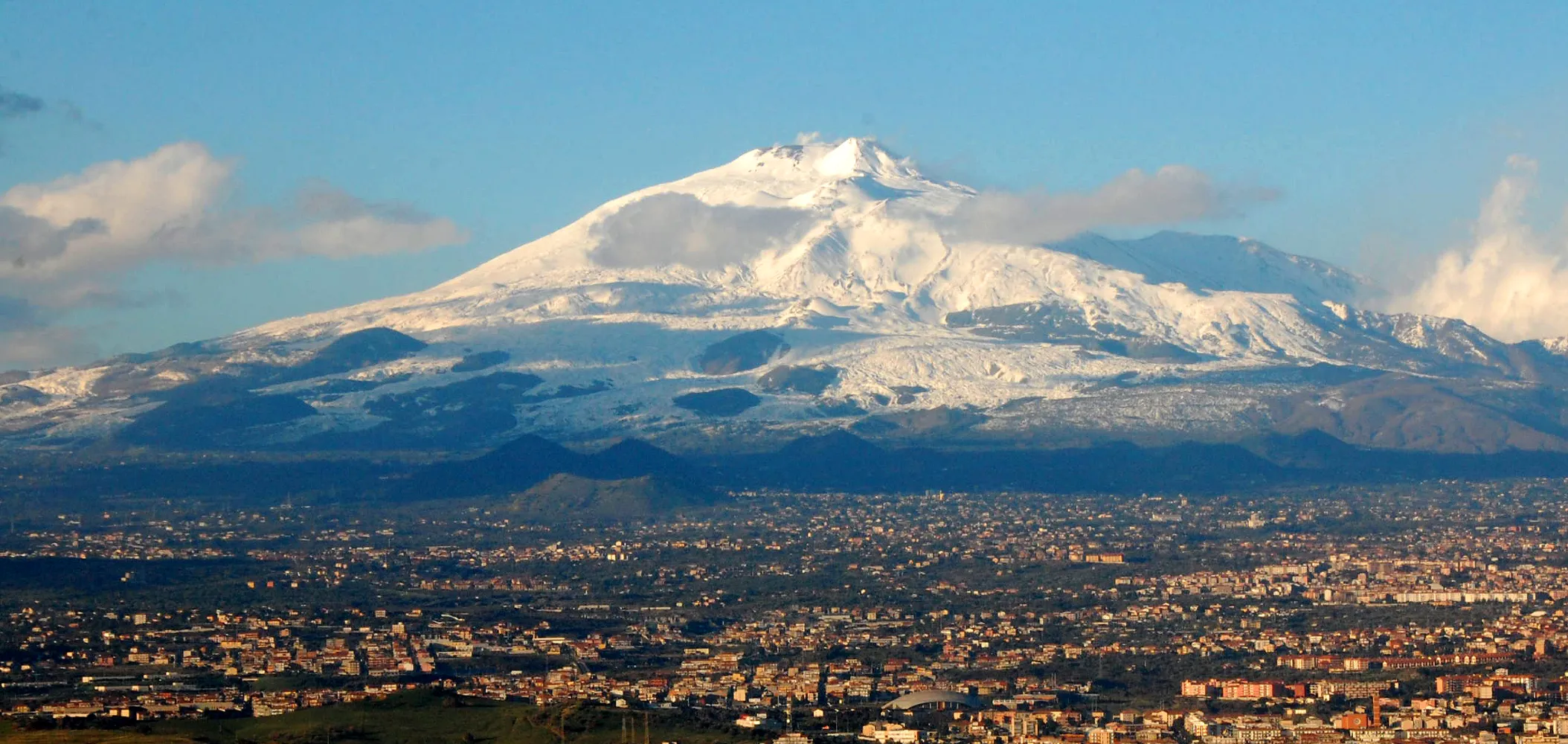
This large island, poised off the toe of Italy, was ancient Rome’s first stepping stone to overseas conquest. But before and after the rise and fall of Rome other cultures contributed to the history of Sicily, ultimately creating a particularly rich and uniquely Sicilian heritage. Mountains, hills, plains and a 1000 km long coastline have provided an equally varied and interesting landscape, including Europe’s tallest and most active volcano, Mount Etna.
Prehistory: The name Sicily perhaps derives from the names of the tribes who already lived here when classical history began in the 5th century BC, the Sikens and the Sicels, but rock carvings suggest that human settlement had begun much earlier, by at least 10,000 BC. Archaeologists have demonstrated that the Aeolian Islands of Sicily featured as an important source of obsidian in a wide-ranging network of prehistoric trade, and that farming villages appeared around 6000 BC.
Trading ’emporia’ of the Bronze Age benefited from seaborne trade and ensured a vibrant, cosmopolitan contact with other Mediterranean cultures. At Pantalica, near Syracuse, there are some impressive hillfort settlements with large rock-cut necropoli dating from the 13 th to 7th centuries BC. The arrival of Greek and Phoenician colonists in the 8th century BC then had profound impacts on Archaic Age Sicily.
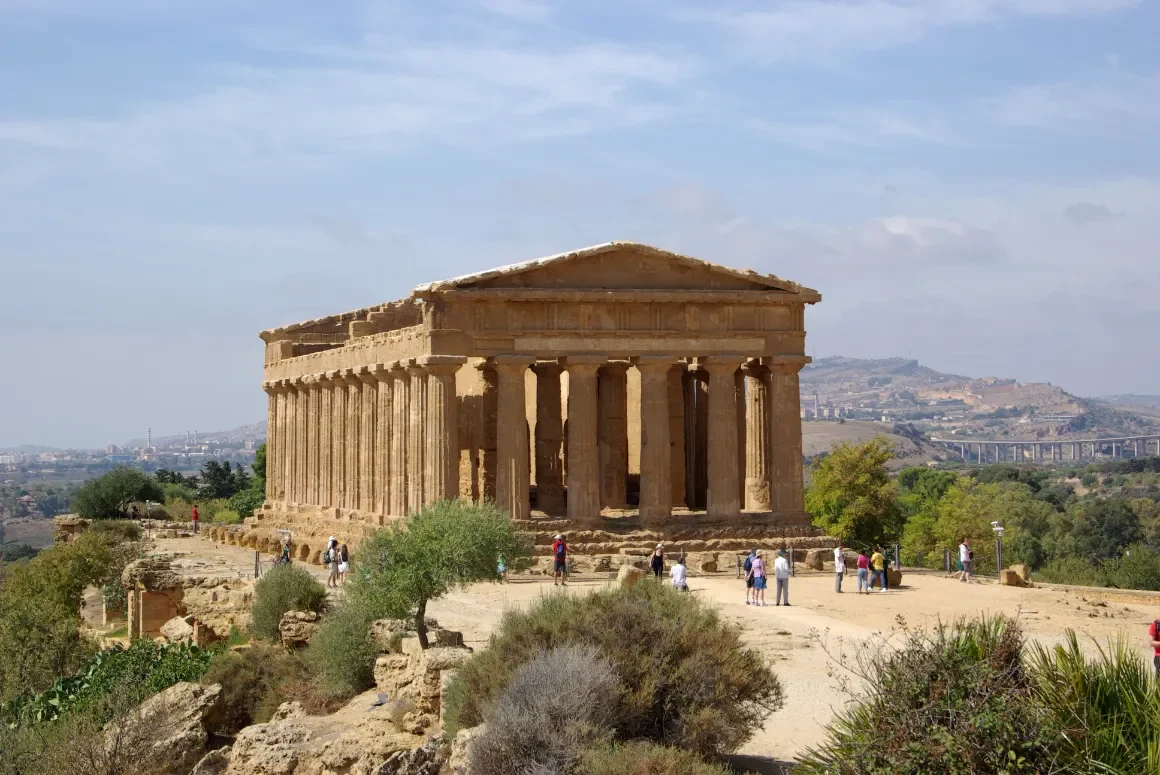
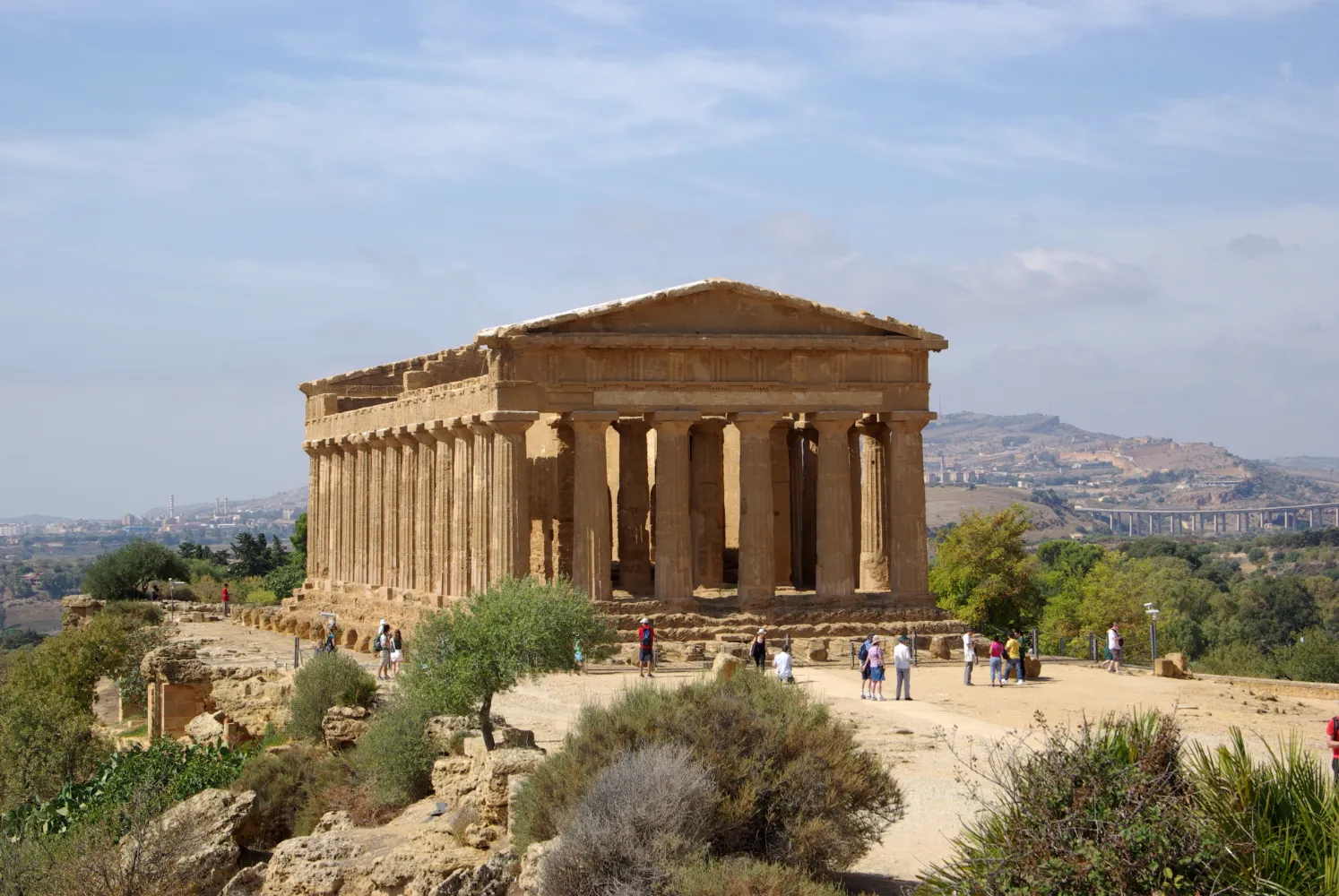
Greeks & Phoenicians: Phoenician remains can still be seen at Motya and in the museums at Marsala and Palermo, but the strongest legacy was left by thriving, sophisticated Greek cities; the Sicilian city of Syracuse even came to rival Athens in power and prestige. Some of the greatest Greek temples are in fact Sicilian, giving us today a veritable open-air museum of Greek architecture. The most famous site is Agrigento, on Sicily’s southern coast, with its ‘Valley of the Temples’ now of World Heritage status. Sicily featured in Greek mythology as the land of the Cyclops, of the sea monsters Scylla and Charybdis, and of the nymph Arethusa.
-
- The Valley of the Temples at Agrigento has some of the world's best Classical Greek temples [1]
-
- Mount Etna, Europe's tallest volcano, dominates the landscape of north-east Sicily [2]
-

- The Valley of the Temples at Agrigento has some of the world's best Classical Greek temples [3]
Recommended Publications:
“The Archaeology of Ancient Sicily” by R. Ross Holloway.
Routledge, 2000 (paperback), 232 pages, 222 black & white illustrations. ISBN 0415237912.
This comprehensive yet accessible survey from Professor Ross Holloway covers the Palaeolithic to later Roman periods and is the standard work on the archaeology of Sicily.
“Sicily from Aeneas to Augustus. New Approaches in Archaeology and History” edited by Christopher Smith and John Serrati.
Edinburgh University Press, 2000 (paperback), 242 pages, 34 black & white illustrations. ISBN 0748613668.
Thirteen essays by established authorities take a stimulating variety of approaches to Sicily’s past from the late Bronze Age to the early Roman Empire, showing how the island’s identity and culture changed and evolved.
“The Greeks in Sicily” by Lorena Jannelli and Fausto Longo.
Arsenale, 2004 (paperback), 136 pages, colour and black & white illustrations. ISBN 8877432985.
A focused and well-presented guidebook providing an accessible overview of Greek colonisation in Sicily, with illustrated chapters on all the main sites. Extracted from its parent volume “Greek Cities of Magna Graecia and Sicily”.
“The Normans in the South, 1016-1130” by John Julius Norwich.
Faber & Faber, 2010 (paperback), 388 pages, ISBN 0571259642.
“The Kingdom of the Sun, 1130-1194” by John Julius Nowrich.
Faber & Faber, 2010 (paperback), 474 pages, ISBN 0571260446
These two volumes recount the dazzling story of the Norman Kingdom of Sicily. This is narrative history at its most scintillating, but it is also a superb traveller’s guide, listing, as it does, every Norman building still extant on the island.
“Sicily Before history. An Archaeological Survey from the Palaeolithic to the Iron Age” by Robert Leighton.
Cornell University Press, 1999 (paperback), 316 pages, 148 black & white illustrations. ISBN 0801485851.
A fairly detailed coverage of Sicily’s prehistoric archaeology which highlights principal sites and developments and addresses social and economic themes, concluding with an account of the indigenous society at the time of Greek and Phoenician settlement in the 8th century BC.
Useful Websites:
-
- The Roman Villa at Piazza Armerina: sights.seindal.dk/sight/456_Villa_Romana_del_Casale.html
Image Attributes
[1] Urban~commonswiki, CC BY-SA 3.0, Source
[2] BenAveling, CC BY-SA 4.0, Source
[3] Berthold Werner, CC BY-SA 3.0, Source
[Feature image] See attribute [3]


